
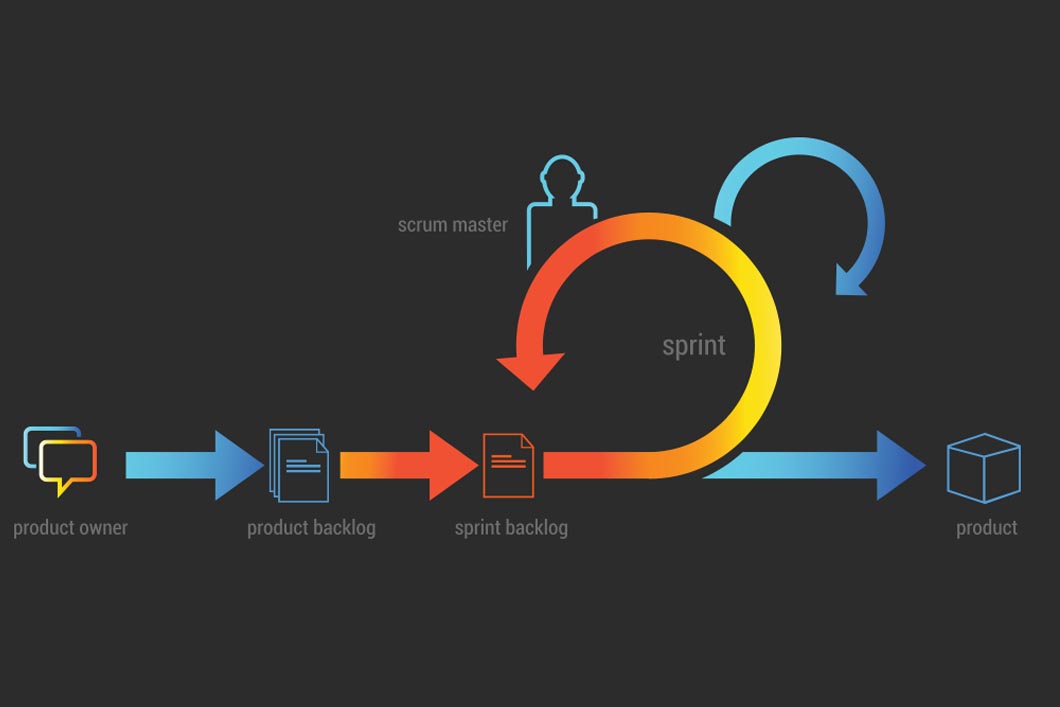
About Course
The Scrum Master Learning Path aims to introduce learners to the Scrum project management methodology. The modules take the learner through all of the key areas of Scrum, as well as some of the other Agile concepts that underpin Scrum to be able to understand and implement scrum as a working methodology within their organization. The aim of the course is to enable the learner to be able to pass a Level 1 Scrum Master certification.
The learning path starts with an introduction to Scrum and Agile, and aims to get the learner to understand the principles and values of the methodology. The second module covers the Scrum Roles that comprise a scrum team. The third looks at the artefacts that enable a scrum team, and how each of the scrum team members interact with them. The fourth looks at the 5 Scrum Events that occur. Their purpose is examined, as well as how they should be used by the Scrum Team. The final Module examines some other Scrum and Agile concepts, including some additional methodologies and techniques that can be implemented. Whilst not necessary, learners may find them useful. The learning path ends with next steps, and provides directions on how the learner can get certified as a Scrum Master.
Intended Audience
The Scrum Master Learning Path is for anyone looking to implement the Scrum framework. It is particularly beneficial for those people within an organization accountable for getting the most out of Scrum, including Scrum Masters, managers, and Scrum Team members.
Learning Objectives
This learning path covers these subject areas:
- Agile
- The Agile Manifesto
- Scrum
- The Scrum Guide
- Scrum Development Team
- Scrum Master
- Product Owner
- Product Backlog
- Sprint Backlog
- Backlog Refinement
- The Definition of Done
- The Increment
- Minimum Viable Product
- Minimum Features Implemented
- Sprint Planning
- The Daily Scrum
- The Sprint
- Sprint Review
- Sprint Retrospective
- Product Value
- Agile concepts of Value
- Kanban
- AgilePM
- DSDM
- Estimation & Relative Estimation
Modules
Module 1 – Introduction to Agile & Scrum (3 Hours)
This Module will look at the basics of what Agile and Scrum are, including the Agile principles and values, and the Scrum principles and Values. This module is supported by videos and a PDF, and is followed by a quiz to help support your understanding.
- Agile
- The Agile Manifesto
- Scrum
- The Scrum Guide
Module 2 – The Scrum Artifacts (5 Hours)
This module introduces the three different artefacts available to a Scrum Team: the Product Backlog, the Sprint Backlog and the Increment; it also looks at the “Definition of Done” within Scrum. This module is made up of Videos, followed by a quiz to help support your understanding.
- Product Backlog
- Sprint Backlog
- Backlog Refinement
- The Definition of Done
- The Increment
- Minimum Viable Product
- Minimum Features Implemented
Module 3 – The Scrum Team (3 hours)
This module introduces the three different roles in a Scrum Team: the Development Team, the Scrum Master and the Product Owner. This module is made up of Videos, followed by a quiz to help support your understanding.
- Scrum Development Team
- Scrum Master
- Product Owner
Module 4 – The Scrum Events (5.5 Hours)
This module introduces the five different events that happen in Scrum: Sprint Planning, the Daily Scrum, The Sprint, the Sprint Review and the Sprint Retrospective. This module is made up of Videos, followed by a quiz to help support your understanding.
- Sprint Planning
- The Daily Scrum
- The Sprint
- Sprint Review
- Sprint Retrospective
Module 5 – Useful Agile Tools (1.5 Hours)
Now that the core Scrum concepts have been covered, this module looks at some other concepts that exist in agile and scrum, including Value, Kanban, estimation and others. This module is made up of Videos, followed by a quiz to help support your understanding.
- Agile concepts of Value
- Kanban
- Estimation & Relative Estimation